
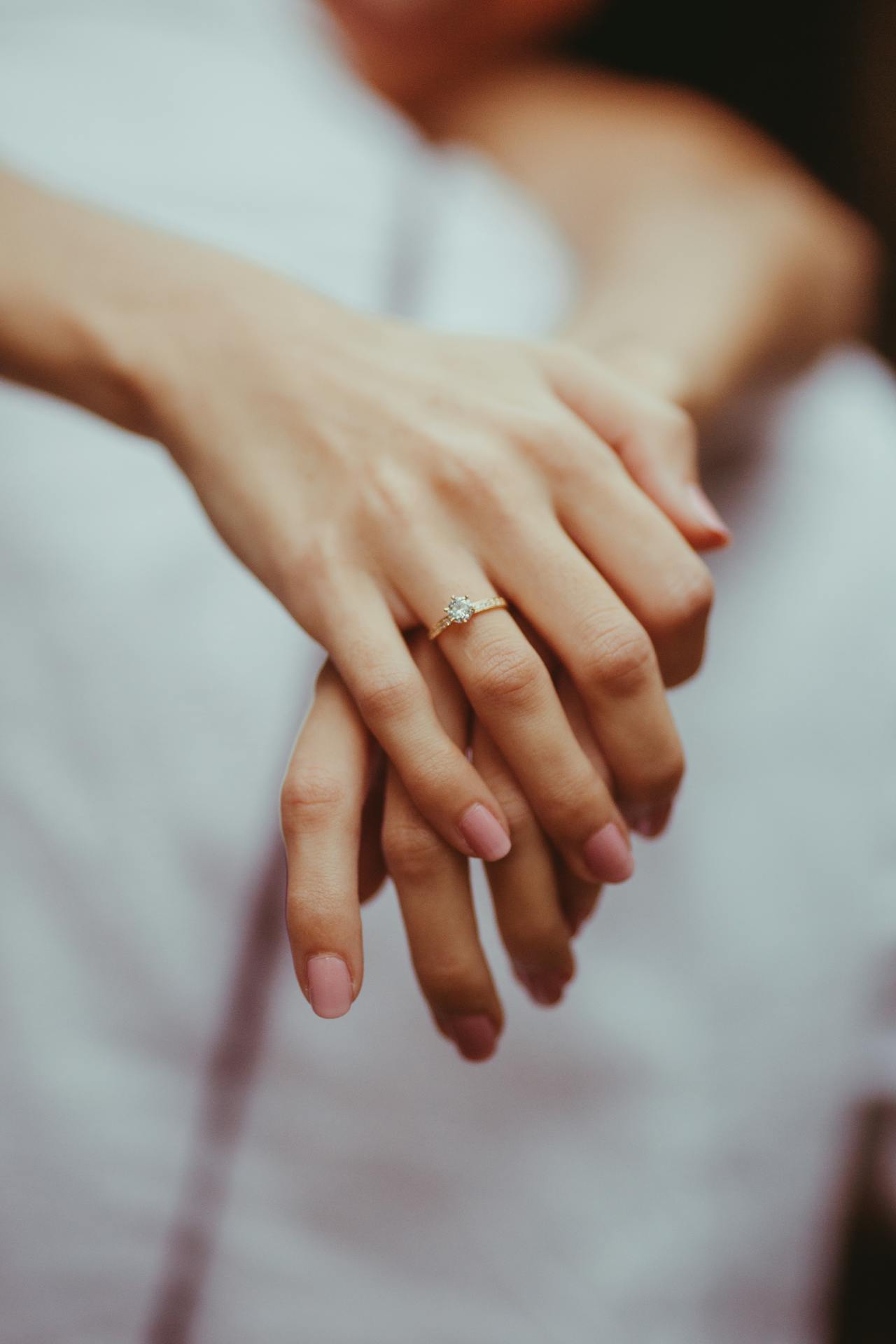
Your engagement ring sits in its box more often than it sits on your finger. The stone looked perfect five years ago, but now you find yourself wondering if something larger or brighter might feel right. Lab-grown diamonds have become a real option for people in your position, and the question of upgrading deserves a straight answer.
Over half of couples now choose lab-grown stones for their engagement rings, according to The Knot 2025 Real Weddings Study. That figure reached 52% this year, up from much lower numbers in 2019. The market has moved, and so have the reasons people consider swapping out their original stones.
What You Give Up with Natural Diamonds
A natural diamond holds between 25% and 50% of its purchase value on resale. That number sounds reasonable until you compare it to what lab-grown stones retain. Lab diamonds may hold little to no resale value at all. If you plan to sell your upgraded ring someday or pass it down as a family piece with financial worth attached, this matters.
Sentimental value operates on different rules. The ring your partner proposed with carries weight that has nothing to do with market prices. Upgrading means making peace with setting that original stone aside or repurposing it in another piece of jewelry.
Carat Size and Cut Options at Lower Price Points
The 84% cost difference between lab-grown and natural diamonds changes what you can afford. A buyer spending $4,900 on a lab-grown ring gets an average center stone of 2.0 carats, compared to 1.6 carats for natural stones at $7,600. That gap allows room to choose cuts that would otherwise push past budget limits.
Elongated shapes like oval, emerald, or a radiant cut diamond ring tend to look larger per carat than round brilliants. With lab-grown pricing, you could move up in carat weight and still select a more distinctive cut without compromise.
The Visual Difference Is Zero
Lab-grown diamonds and natural diamonds look identical to the naked eye. They share the same chemical composition, the same hardness, and the same optical properties. A jeweler needs specialized equipment to tell them apart. Your friends at dinner will not know the difference, and neither will you when you glance down at your hand.
The distinction exists at the origin point. Natural diamonds formed over billions of years under geological pressure. Lab diamonds grow in controlled environments over weeks. Both end up as carbon crystals with the same structure.
Price Gaps Keep Widening
Paul Zimnisky Diamond Analytics reports that in the first quarter of 2025, a 1-carat lab-grown diamond costs around $845. A comparable natural diamond runs approximately $3,895. That gap has grown over time, and lab-grown prices continue to drop as production scales up.
This creates an odd situation for upgrades. A lab diamond you buy now might be worth less in five years simply because production costs keep falling. Natural diamonds hold more stable pricing, though they also depreciate the moment you walk out of the store.
When Upgrading Makes Sense
Your original ring does not fit your life anymore. Maybe your style has changed, or the setting catches on clothing and gets in the way. Practical reasons for upgrading have nothing to do with the stone itself.
Financial constraints limited your first purchase. Many couples buy rings during periods when money is tight. Upgrading later with lab-grown options lets you get the ring you actually wanted without the original price tag.
You want a larger stone without spending $7,600 or more. The average lab-grown engagement ring costs $4,900, and you get a bigger center stone for that money.
When Upgrading Does Not Make Sense
The original ring carries meaning you cannot replace. Some people feel attached to the specific stone their partner chose. Swapping it out might feel like erasing part of the proposal itself.
Resale value matters to you. If you see the ring as an asset with financial utility, lab-grown diamonds perform poorly on that measure.
You already have a natural diamond and want to maintain consistency. Mixing natural and lab-grown stones in a collection can feel mismatched to some buyers.
Talking to Your Partner
The ring belongs to you, but the decision affects both people in the relationship. Your partner might have opinions about the original ring being replaced. They might also be relieved that you brought it up first.
A conversation before any purchase prevents awkwardness later. Some couples upgrade together and treat it as a shared decision. Others handle it individually. There is no correct approach, but silence tends to create problems.
The Practical Steps
Get your original ring appraised before making any decisions. Knowing its current value gives you a baseline.
Decide what to do with the original stone. Options include resetting it in a pendant, keeping it stored, or selling it. Each choice has different implications.
Set a budget for the upgrade based on what you actually want, not what feels expected. Lab-grown pricing gives you flexibility, but spending limits still matter.
Visit a jeweler who carries both natural and lab-grown options. Seeing stones in person clarifies preferences that online shopping cannot replicate.
The answer to your question depends on what you want the ring to do for you. If size, cut, and cost matter most, lab-grown diamonds make the upgrade straightforward. If long-term value and origin carry weight, the decision gets more complicated.