
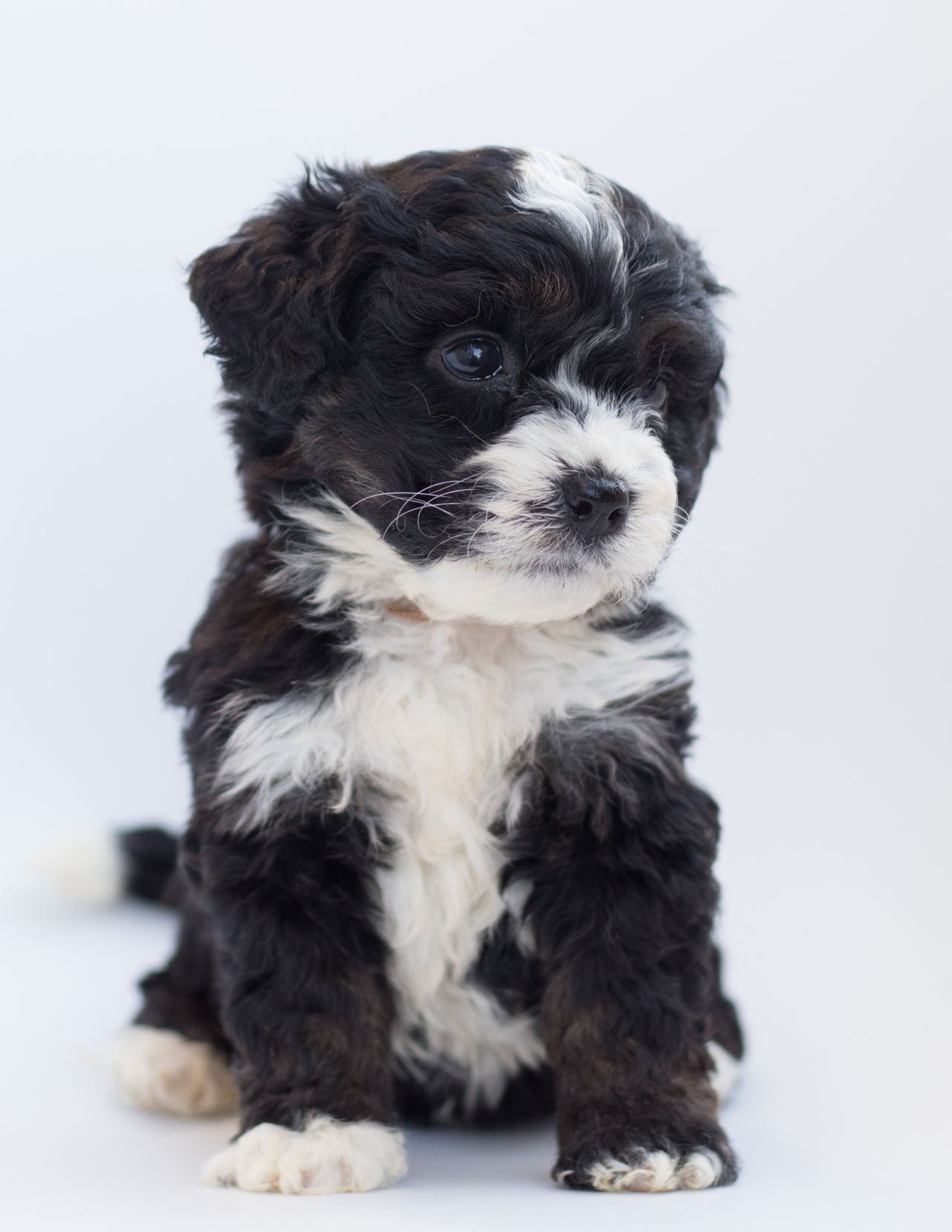
Is a mini bernadoodle right for your family? Bringing a puppy into the family is one of those decisions that can completely change everyday life. There are the obvious moments to look forward to—morning cuddles, walks, playful afternoons and having a four-legged companion waiting at the door—but there is also plenty to consider before choosing the right dog.
For families looking for a friendly companion with an affectionate personality and a manageable size, the Mini Bernedoodle has become an increasingly popular choice. A cross between a Bernese Mountain Dog and a Poodle, the Bernedoodle combines characteristics from both breeds and can make a loving family companion.
But choosing a puppy should never be based on appearance alone. Before searching for a Mini Bernedoodle, it is worth considering your home, schedule, lifestyle and ability to meet a dog’s needs for many years to come.
What Is a Mini Bernedoodle?
A Bernedoodle is a cross between a Bernese Mountain Dog and a Poodle. Depending on the Poodle parent and breeding, Bernedoodles can come in several sizes, including miniature varieties. Central Park Puppies describes Mini Bernedoodles as one of the smaller doodle breeds available through its breeder network.
Their appearance can vary considerably. Some have wavy coats, while others may have curlier or straighter hair. Colouring and markings can vary too, which is part of the appeal for families drawn to the breed.
However, prospective owners should remember that no crossbreed puppy will develop exactly according to a photograph or expectation. Adult size, coat and personality can vary, so it is important to ask questions about the puppy and its parents rather than making assumptions.
Why Families Are Drawn to Them
One of the biggest attractions of the Bernedoodle is its combination of intelligence, affection and playful energy.
Bernedoodles are generally described as social and loving dogs, while the Poodle side contributes intelligence and trainability. The Bernese Mountain Dog side can contribute a gentle and loyal temperament.
That combination can make the breed appealing to families who want an interactive companion rather than a dog that simply occupies space in the home.
Of course, individual personalities differ. Even puppies from the same litter can have noticeably different temperaments, which is why choosing a puppy should involve looking beyond breed characteristics.
Consider Your Family’s Daily Routine
Before bringing home any puppy, think honestly about what a normal weekday looks like.
Who will feed the puppy in the morning? Who will handle toilet training? How much time will the dog spend alone? Who will provide exercise, play and training?
These questions matter more than having a large garden or a beautiful home.
A puppy needs consistency, patience and supervision, particularly during the early months. Families with children should also make sure everyone understands how to interact appropriately with a young dog.
Children can be involved in age-appropriate responsibilities, but adults should remain responsible for the puppy’s essential care.
Prepare Your Home Before the Puppy Arrives
Puppy-proofing is one of those jobs that is much easier to do before your new arrival comes home.
Look at your house from a puppy’s perspective. Electrical cables, small objects, cleaning products, certain houseplants and anything else that could be chewed or swallowed should be secured or removed.
It is also helpful to create a dedicated area where the puppy can sleep and relax. A comfortable bed, food and water bowls, suitable toys, grooming supplies and cleaning essentials can all be prepared ahead of time.
If you have children, establishing a quiet space where the puppy can retreat when it needs rest is particularly useful. Young dogs need plenty of sleep, and learning to respect that space can help children and puppies develop a positive relationship.
Training Should Begin Early
A new puppy doesn’t arrive knowing the rules of your household.
Training therefore needs to become part of everyday life from the beginning. Simple routines around feeding, toilet training, sleeping, walking and basic commands can help a puppy understand what is expected.
Bernedoodles are considered intelligent and generally responsive to training, but intelligence doesn’t eliminate the need for patience. Puppies can become distracted, excited or stubborn, particularly when something more interesting catches their attention.
Short, positive training sessions are often more productive than expecting a young puppy to concentrate for long periods.
Consistency between family members is equally important. If one person allows something that another person discourages, the puppy can quickly become confused.
Socialisation Is Just as Important
Training teaches a puppy how to behave, while socialisation helps it become comfortable with the world around it.
Gradually introducing a puppy to different people, environments, sounds and appropriate experiences can help it develop confidence. The process should be age-appropriate and follow veterinary advice, particularly before a puppy has completed its initial vaccinations.
Socialisation isn’t about overwhelming a puppy with new experiences. It is about giving it opportunities to discover the world safely and positively.
This can be especially valuable for family dogs that will encounter children, visitors, other pets and busy environments throughout their lives.
Think About Grooming
The Bernedoodle coat is another consideration that prospective owners shouldn’t overlook.
Coats can vary from wavy to curly, and grooming requirements can depend on the individual dog’s coat type. Regular brushing can help prevent tangles and mats, while professional grooming may also become part of the routine.
Before choosing a puppy, ask about the expected coat characteristics and what grooming may involve.
It is easy to focus on how fluffy and adorable a puppy looks without considering the maintenance that comes later. Understanding the commitment beforehand makes it easier to decide whether the breed suits your lifestyle.
Choosing a Puppy Should Involve More Than Looks
It is almost impossible not to fall in love with puppy photographs. However, choosing based solely on colour, markings or appearance can lead to disappointment if other important questions haven’t been answered.
Ask about veterinary care, vaccinations, health records, the puppy’s parents, temperament and early socialisation.
Responsible puppy providers should be willing to provide clear information about the puppy’s health and background. Central Park Puppies states that its puppies receive veterinary health checks and provides health and vaccination documentation, with additional health-guarantee terms depending on the puppy and purchase.
Prospective owners should always review the actual terms and documentation carefully and ask questions before making a commitment.
Is a Mini Bernedoodle Suitable for a Busy Family?
This is perhaps the most important question.
A Mini Bernedoodle may be an excellent companion for the right household, but no dog should be chosen simply because it is considered a popular family breed.
Think about how much time your household can realistically dedicate to exercise, training, grooming, play and companionship.
If everyone works or attends school for long periods, consider how the puppy will be cared for during the day. If you travel frequently, think about who will look after the dog.
A puppy is not a short-term project. It is a commitment that can last well over a decade, so your future plans matter too.
Finding the Right Puppy
Once you have decided that the breed fits your lifestyle, you can begin researching reputable sources and available puppies.
Families specifically looking for mini bernedoodle puppies for sale should compare the information provided by different breeders or puppy providers rather than rushing to purchase the first puppy they see.
Look for transparent information about health, veterinary care, the puppy’s background, expected size and available documentation. It is also worth asking about transportation arrangements if the puppy is located outside your area.
The more questions you ask before making a decision, the more confident you can feel about bringing a new member into your family.
The First Few Weeks Are About Building a Relationship
When your puppy finally arrives, don’t expect everything to fall into place immediately.
The first few weeks are about learning each other’s routines. Your puppy is adjusting to a completely new environment, while your family is learning how to communicate with it.
There may be accidents, interrupted sleep, chewed belongings and moments when you wonder whether you were completely prepared.
There will also be plenty of rewarding moments.
The first successful toilet trip outside, the first walk, the first command learned and the first time your puppy chooses to curl up beside you can all become memories that stay with the family for years.
Final Thoughts
Choosing a puppy is about much more than finding the cutest face. It means considering whether the breed and individual dog fit your family’s lifestyle, home and long-term plans.
Mini Bernedoodles can be affectionate, intelligent and playful companions, but they still require time, training, grooming, exercise and responsible care.
For families willing to make that commitment, bringing home a puppy can be an incredibly rewarding experience.
The best preparation isn’t simply buying a bed and filling the cupboard with treats. It is understanding what your new dog needs, choosing a responsible source, preparing the household and making sure everyone is ready for the responsibility.
Because while puppyhood may pass surprisingly quickly, the relationship you build with your dog can become one of the most rewarding parts of family life.