
Everyone I know seems to be talking about home batteries at the moment, and I’ll be honest, for ages I nodded along without really knowing what one was. I assumed it was a solar panel thing and that it didn’t apply to us. Turns out I was half wrong, and the half I was wrong about is the interesting bit.
So this is the plain English version. What a home battery actually does, what it costs, where the enormous thing goes in your house, and the tax deadline that nobody seems to be mentioning.
So what does a home battery actually do?
It stores electricity so you can use it later. That’s genuinely it.
The clever part is when it stores it. Electricity is not the same price all day. If you’re on a tariff with cheap overnight rates, the battery fills up in the middle of the night when power is cheap, then runs your house through the morning and evening when it’s expensive. You’re using exactly the same amount of electricity, just buying it at a better time.
If you have solar panels, it does the other useful thing too. Panels generate most in the middle of the day, which is exactly when most of us are out. Without a battery, all that lovely free electricity goes back to the grid for a few pence. With one, it sits and waits for you to get home and put the oven on.
You don’t actually need solar panels
This is the bit I had completely wrong, and I don’t think I’m alone.
A battery works perfectly well on its own. No panels, no roof work, no scaffolding. It charges from the grid overnight at a cheap rate and discharges during the day. For anyone in a house where solar isn’t practical, and that’s a lot of us with north-facing roofs, conservation areas, or flats, that changes the maths completely.
It also means you’re not committing to a roof full of panels as a first step. You can do the battery, live with it, and add panels later if you want to.
The 0% VAT thing (and the deadline)
Right, this is the bit I’d genuinely want a friend to tell me, so I’m telling you.
Home batteries in the UK currently carry 0% VAT rather than the usual 20%. On a £7,000 install that’s well over a thousand pounds you’re simply not paying.
Two things worth knowing about it.
One: it used to only apply if you fitted the battery at the same time as solar panels. That changed on 1 February 2024, when the relief was extended to cover standalone batteries and retrofits too. So if you had panels put in years ago and want to add a battery now, or you’re doing a battery on its own with no panels at all, it still qualifies.
Two, and this is the one: the zero rate is temporary. It runs until 31 March 2027, and from 1 April 2027 it’s scheduled to go up to 5%. That’s not the end of the world, but it’s a chunk of money, and it’s a date worth having in your head if you’re the sort of person who thinks about something for eighteen months before doing it. Which, hi, is me.
I’d add the obvious caveat that tax rules change and I’m a person with a blog rather than an accountant. But it’s worth asking any installer to confirm the VAT position in writing on your quote.
Where does the thing actually go?
Nobody talks about this and it’s the first thing I wanted to know.
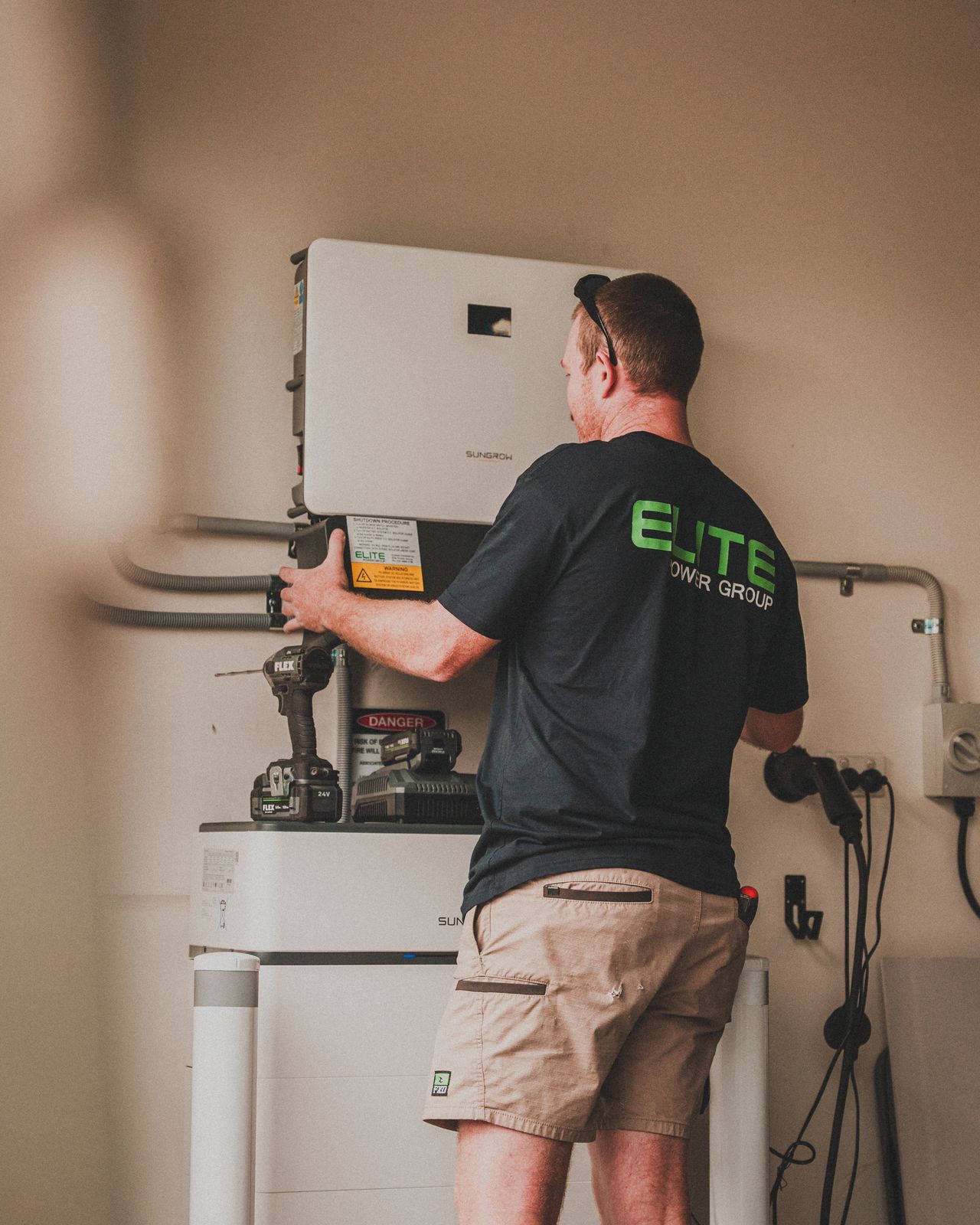
A home battery is a big flat unit, roughly the size of a large radiator, and it’s heavy. It’s usually wall-mounted, though some can stand on the floor. Most of the ones I’ve seen are rated for outdoor installation, so a garage, utility room, plant room or an external wall are all normal.
Things I’d think about:
- It is not a small appliance. Measure the wall properly before you fall in love with the idea of putting it in the utility.
- Outside walls are fair game, which is often the tidiest answer, but think about which wall. Not the one you look at from the kitchen window.
- There’ll be cabling and an isolator near it. It’s not just one clean box.
- It makes a small amount of noise. Not loud, but I wouldn’t put it on the other side of a bedroom wall.
If you’re mid-renovation, this is very much a decide-early thing rather than a work-it-out-later thing. Same category as the small changes that make a home feel more finished: far easier before the plastering than after.
What it costs, honestly
Installed prices for a decent home battery in the UK sit somewhere around £7,000 to £8,000 at the time of writing, though it varies a lot with your property, whether you already have solar, and how complicated the cable run is.
Payback is where I’d be a bit careful, because the numbers you’ll be quoted vary enormously. I’ve seen the same product described as paying for itself in six years by one page and eight to twelve by another. Both can be true, because it depends almost entirely on:
- What tariff you’re on, and how big the gap is between your cheap overnight rate and your peak rate
- How much electricity you actually use, and when
- Whether you have solar, and how much of it you’re currently exporting for pennies
- Whether you charge a car at home
My honest take: if someone gives you a confident single number for payback without asking what tariff you’re on, be a bit suspicious. Ask them to show you the assumptions.
The Tesla one everybody asks about
The battery that comes up most in conversation is the Tesla Powerwall 3, mostly because it’s the name people recognise.
The useful things to know: it stores 13.5 kWh, which is roughly a day’s electricity for an average home depending how heavy-handed you are with the tumble dryer. It has the solar inverter built into it, so if you’re having panels too, that’s one less separate box on the wall, which matters more than you’d think when you’re looking at where everything goes. It comes with a ten-year warranty. And you manage the whole thing from an app, which is either delightful or another app, depending on your temperament.
It’s not the only good battery, and I’d always get more than one quote. But if you’re going to be told about one by name, it’ll probably be this one, so it’s worth knowing what it is.
What I’d ask before signing anything
If I were getting quotes tomorrow, this is my list:
- Are you MCS certified? This matters for getting paid for any electricity you export, and it’s the standard question to ask.
- Is the 0% VAT applied on this quote? It should be, and it should be visible.
- What tariff are you assuming for the savings figures? If they haven’t asked what tariff you’re on, the savings number is made up.
- Exactly where is it going, and can you show me? Walk the wall with them.
- What’s the warranty on the battery, and separately on your workmanship? These are two different things and both matter.
- Are you subcontracting the install? Not automatically a problem, but you want to know.
- What happens in a power cut? Some setups keep your house running, some don’t. Don’t assume.
- Can I see a recent local install? Any decent firm will have one nearby.
So is it worth it?
For us, I think it’s a when rather than an if, and that’s mostly because of the tariff thing. The idea of buying electricity at the cheap rate and using it at the expensive one just makes obvious sense to me in a way that solar panels on a not-brilliant roof never quite did.
But I’d also say this. It’s a lot of money up front for a saving that arrives slowly, and if you’re choosing between a battery and, say, actually insulating properly, the insulation probably wins first. Nobody selling batteries will tell you that.
If you’re at the thinking-about-it stage, my advice is to get two or three quotes, ask every single question on that list, and have a look at what your current tariff actually charges you at different times of day. That last one is free and takes ten minutes, and it’ll tell you more about whether a battery makes sense for your house than any brochure will.
I’ll report back once we’ve actually done it. Knowing us, that’ll be about 2028, but here’s hoping I beat the VAT deadline.
Sources
- ICAEW, Energy saving materials relief extended from February 2024 (zero rate extended to standalone and retrofit battery storage from 1 February 2024; relief runs to 31 March 2027): https://www.icaew.com/insights/tax-news/2023/dec-2023/energy-saving-materials-relief-extended-from-february-2024
- Stratford Energy Solutions, Tesla Powerwall 3 (first-party, accessed September 2026): https://www.stratfordenergy.co.uk/residential/tesla-powerwall-3/