
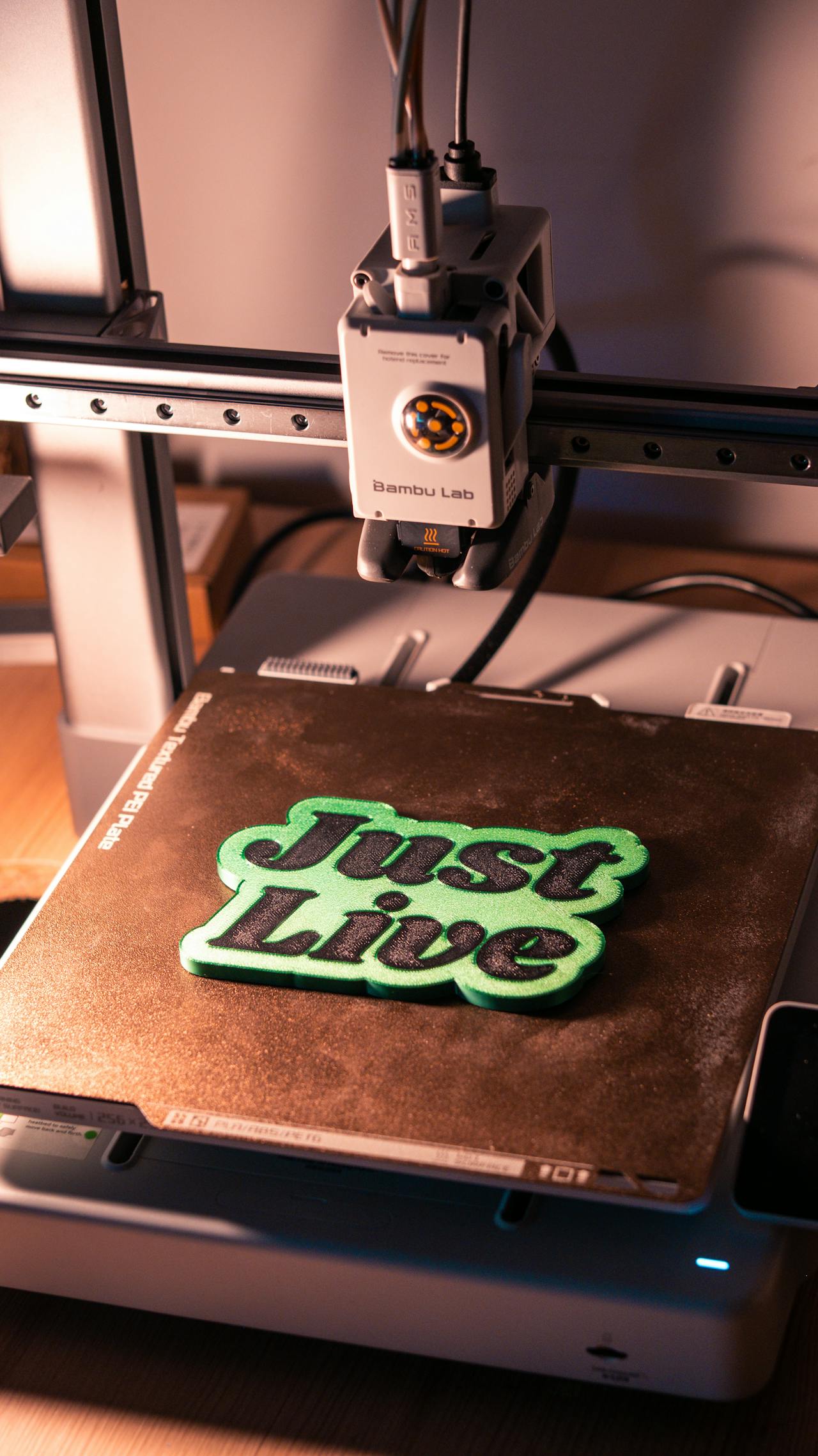
3D Printing or traditional manufacturing? Remember when sourcing a part meant cold-calling multiple vendors, waiting days for quotes, then crossing your fingers on delivery? That world is gone, not fading, gone. Today’s digital manufacturing platforms, online 3D printing services, and on-demand manufacturing workflows have fundamentally rewritten how products get built.
If you’re a founder juggling a launch deadline, an engineer managing a rapid prototyping cycle, or a product manager trying to control production costs and hit a Q3 target, understanding which manufacturing method, whether additive manufacturing or CNC machining services, actually fits your project isn’t just helpful; it’s essential.
Choosing Between CNC and 3D Printing: Why It’s Not Simple Anymore
Here’s the truth: deciding to choose between CNC and 3D printing services used to feel like choosing between a hammer and a nail gun. Today, it feels more like configuring a software stack. There are tradeoffs everywhere: cost, lead time, design freedom, material behavior, and scalability. Price alone won’t guide you.
Quick primer, in case it helps. CNC machining is subtractive; it shaves material off a solid block until your part appears. 3D printing is additive; it stacks ultra-thin layers from a digital file upward. Both methods are genuinely capable. Neither automatically wins.
What has changed dramatically is access. With 3d printing services online platforms now widely available, you can upload a CAD file, get a quote in minutes, and compare your options without leaving your desk. That friction reduction alone has flipped how procurement teams make decisions.
The Real Cost Story
Any honest cost comparison of manufacturing methods needs to start with one question: what volume are you actually running?
For anything under a few hundred units, additive manufacturing typically wins on total cost. Why? Because CNC requires fixturing, programming, and sometimes custom jigs, the kind of overhead that shows up on your invoice, whether you order ten parts or two hundred. There’s no escaping it.
Research has shown that significant cost savings are achievable with 3D printing, even when material costs are higher. If you’re building out prototyping budgets, that’s a factor well worth keeping in mind.
Iterating on Prototypes Without Going Broke
Teams searching for the best manufacturing method for prototypes almost always care about one thing above everything else: speed of iteration. Not surface finish. Not tolerances. Speed.
3D printing lets you test three design variants in the time it takes CNC to complete setup on the first version. Functional validation doesn’t demand perfection; it demands results quickly, and additive manufacturing delivers exactly that.
Head-to-Head: Where Each Method Actually Wins
Costs and prototyping are the obvious starting points. Let’s go deeper.
Speed to Market
Injection molding tooling alone can eat two to eight weeks before a single part exists. That’s brutal on tight timelines. Online 3D printing, by contrast, can put functional parts in your hands within 24 to 72 hours. For fast-moving projects, that difference isn’t marginal; it’s the whole game.
Design Freedom
Speed is compelling. But pair it with geometric freedom, and additive manufacturing becomes genuinely hard to argue against for complex geometries. Internal channels, organic shapes, lattice structures, and traditional tooling either can’t produce them or charge you painfully for trying. 3D printing handles all of it without a price penalty.
Breaking Down Cost by Volume
Here’s a practical reference table before you pull up any quoting tool:
| Production Volume | Recommended Method | Reason |
| 1–500 units | 3D Printing | No tooling cost, fast setup |
| 500–5,000 units | Evaluate both | Break-even zone |
| 5,000+ units | CNC / Injection Molding | Per-unit cost drops significantly |
This cost comparison manufacturing methods framework won’t decide for you, but it anchors the conversation in something real.
Tolerances and Material Quality
Traditional CNC still edges ahead on tight tolerances and surface finish, especially for metal components. That’s just honest. But HP Multi Jet Fusion, Direct Metal processes, and engineering-grade nylon options have genuinely closed the gap. Modern 3D-printed parts are increasingly functional in real end-use applications, not just prototypes.
Inventory vs. On-Demand
Traditional manufacturing pushes large minimum order quantities onto your books. That means warehousing, dead stock risk, and capital tied up in shelves. On-demand 3D printing flips that model entirely; you produce what you need, when you need it. No storage burden. No waste from overordering.
Environmental Impact
Additive manufacturing builds up instead of cutting down, so material waste drops substantially. Topology-optimized parts are lighter too, which trims shipping emissions. That sustainability angle matters more each year, and not just for optics.
What’s Coming Next in 3D Printing
The current advantages are meaningful. What’s accelerating right now is even more interesting.
3D printing adoption in manufacturing settings increased by 25 percent year-over-year from 2021 to 2023. That number signals genuine industry confidence, not hype cycles.
AI-Optimized Print Workflows
AI-enhanced slicing software now adjusts print paths dynamically, cutting material use and print time without touching part integrity. Teams using generative design tools are documenting measurable performance gains on complex parts. That’s worth paying attention to.
Distributed Manufacturing Networks
The debate on online 3D printing vs local manufacturing has evolved into something more strategic. Global platforms have dissolved geographic limitations entirely, your team can evaluate distributed networks and access the best of both worlds without geographic compromise.
Supply Chain Agility
Localized on-demand printing adds something increasingly valuable: genuine resilience. When a disruption hits one region, distributed digital manufacturing means production doesn’t stop. It reroutes. That’s a structural advantage traditional centralized supply chains simply can’t match.
Frequently Asked Questions
1. What’s cheapest for runs under 500 units?
3D printing, almost without exception. No tooling, minimal setup, fast turnaround, it consistently wins at low volumes.
2. How reliable are tolerances from 3d printing services online compared to CNC?
Reliability of tolerances from 3d printing services online has improved considerably, with SLS and MJF processes hitting ±0.2mm on functional components. CNC still leads for precision metal parts, but the gap has narrowed.
3. Why should small businesses think carefully before locking into one method?
Small businesses that approach outsourcing manufacturing decisions deliberately, weighing volume, geometry, and timeline together, consistently outperform those who commit blindly to one process upfront.
4. How do you account for iteration cost?
Budget for at least three design revisions. Additive manufacturing absorbs that iteration cost far better than tooling-dependent processes, and your early-stage financial risk shrinks considerably because of it.
The Future of Large-Scale Printing
The quality gap between traditional manufacturing and online 3D printing keeps shrinking. The speed and flexibility gap keeps growing, in additive’s favor. Teams that thoughtfully choose between CNC and 3D printing services, guided by volume thresholds, design complexity, and real budget constraints, will consistently outmaneuver teams locked into a single method.
The smartest outsourcing manufacturing decisions today run a hybrid playbook: prototype and validate with additive, then scale with traditional processes once the design is locked. Upload your CAD file to a quoting platform today. Let actual numbers make the call, not assumptions.


