A kitchen sink is one of the hardest-working features in the room, but it also has a strong visual presence. Its size, shape, material, and finish can influence how the worktop, cabinetry, tapware, and surrounding hardware all come together. For homeowners planning a considered renovation, exploring luxury kitchen sinks can be a useful starting point when the goal is to combine practical performance with a more refined, cohesive look.
Start With the Overall Kitchen Style
The sink should feel like part of the wider kitchen rather than a separate decision. Before choosing a shape or finish, look at the cabinetry, worktops, flooring, and hardware already planned for the space. A traditional kitchen may suit a deeper, more substantial sink with a classic profile, while a modern scheme may benefit from a cleaner silhouette and more restrained detailing.
The key is to create a sense of visual continuity. If the room already includes natural stone, warm metal finishes, timber, or painted cabinetry, the sink should support those materials rather than compete with them. This does not mean every surface needs to match. It means each choice should feel connected to the same design direction.
Think Carefully About Size and Proportion
A sink that looks beautiful in isolation may feel out of place once it is installed. Proportion matters, especially when the sink sits within a large island, a narrow run of cabinetry, or a compact kitchen where every centimetre of worktop is important.
A generous sink can work well in a larger kitchen, particularly for households that cook often or use oversized pans and trays. In a smaller space, an oversized bowl may take up valuable preparation area. The right choice depends on how much room you have, how the kitchen is used, and how the sink relates visually to the surrounding cabinetry.
It is also worth considering depth. A deeper bowl can make washing larger items easier, while a shallower sink may feel more comfortable for some users and leave more room inside the cabinet below.
Choose a Material That Works With the Palette
Sink material has a big influence on the mood of the kitchen. Stainless steel feels clean and practical, ceramic brings a softer and more traditional quality, while bronze and other distinctive metals can introduce warmth and character.
Think about how the sink material will sit beside the worktop and tapware. A strong contrast can make the sink a focal point, while a more tonal combination can create a quieter look. In high-end kitchens, material choices often feel most successful when they echo other finishes already present in the room.
Durability matters too. The sink will be used every day, so the material should suit the household as well as the design. A beautiful finish is most useful when it can handle the way the kitchen actually functions.
The way a sink is installed changes both its appearance and how easy it is to use. Undermount sinks create a clean transition between the worktop and the bowl, which can work especially well with stone or composite surfaces. They also make it easier to wipe crumbs and water directly from the counter into the sink.
Apron-front and farmhouse-style sinks create more of a visual statement. They can add character to painted cabinetry and work particularly well in kitchens with a traditional or transitional feel. Top-mount sinks offer a more visible rim and can suit certain materials or layouts.
The best mounting style depends on the look you want, the worktop material, and the practical needs of the space. It is worth making this decision early because it can affect worktop fabrication and cabinet design.
Coordinate the Sink With Tapware and Hardware
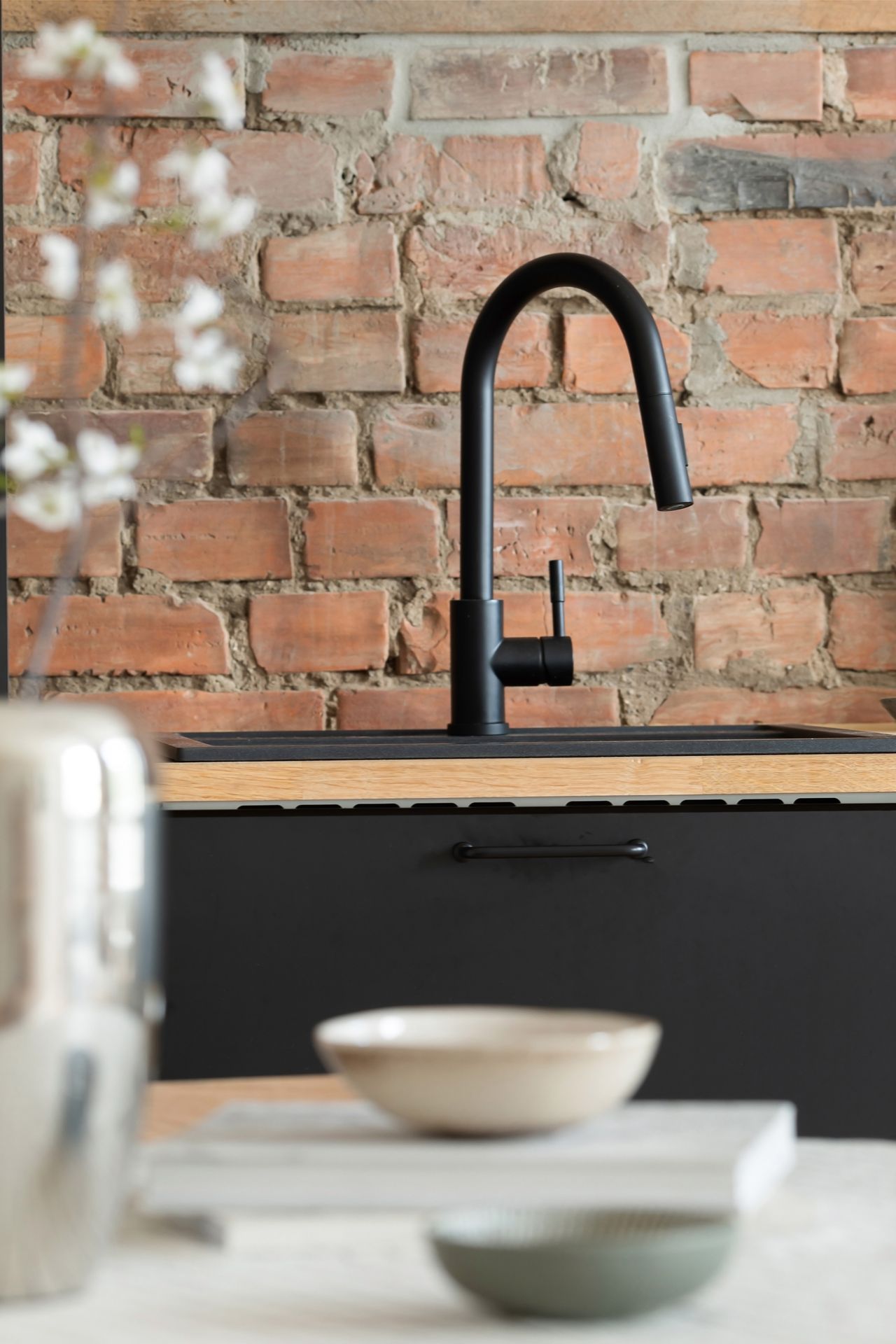
A sink rarely sits alone. Tapware, cabinet pulls, door hardware, and lighting all contribute to the same visual field, so they should be considered together.
You do not need to use exactly the same finish everywhere. In fact, a room can feel richer when related materials have slight variation. A bronze sink, for example, might work with warm brass or aged metal details elsewhere in the kitchen, provided the undertones feel compatible.
The aim is to build a clear material language. When the sink, tapware, cabinetry, and hardware relate to one another, the kitchen tends to feel more polished and intentional.
It is easy to focus on appearance during a renovation, but the sink must also work well every day. Think about how often you cook, whether you wash large pans by hand, and how many people use the kitchen at the same time.
A single large bowl may offer flexibility for oversized items, while a divided sink can make it easier to separate washing and rinsing. Accessories such as grids, drainers, and fitted boards can also improve functionality, especially in busy kitchens.
These practical considerations should be built into the design from the beginning. A sink that works with your routine will feel far more successful over time than one chosen mainly for its appearance.
Some kitchens benefit from a sink that blends quietly into the background. Others can handle a more expressive choice that adds personality to the room.
If the rest of the kitchen is restrained, a distinctive sink material or finish can introduce warmth without making the space feel busy. In a more detailed scheme, a simpler sink may help balance the overall look. The right level of contrast depends on the character you want the kitchen to have.
This is where the sink can become more than a practical fixture. It can help shape the mood of the room and add a sense of craftsmanship to an otherwise familiar feature.
A kitchen renovation is a significant investment, so the sink should feel appropriate long after the initial design is complete. Trends may influence colour and styling choices, but materials with depth, durability, and a strong relationship to the architecture tend to age more gracefully.
A well-chosen sink can support the kitchen for years while continuing to feel part of the wider design. When size, material, mounting style, and finish are considered together, the result is a feature that works hard every day while helping the whole room feel more complete.