A Dublin kitchen is famously tight. Whether you’re in a Georgian conversion in Rathmines, a new-build apartment near the Docklands, or a red-brick terrace in Drumcondra, the kitchen is usually where space runs out first. But a small footprint doesn’t mean you have to cook badly, store nothing, or give up the appliances you actually want. The trick is choosing the right kit for the room, not just buying smaller versions of everything and crossing your fingers. Getting it right takes real thought about layout, dimensions, and what you genuinely reach for on a Tuesday evening. This guide looks at which appliances suit compact Dublin kitchens, how to pick sizes that work for Irish homes, and which layout moves let you fit more without the room closing in on you. If you’ve been putting off an upgrade because the space feels too awkward, the right appliances will change that faster than any renovation.
Choosing the Right Appliances for a Small Kitchen
The first decision in any compact kitchen isn’t colour or finish – it’s dimensions. You need your exact measurements before you look at a single product, because an appliance that’s even a few centimetres too wide can make a door impossible to open properly. You can find fridge freezers online in Ireland; you’ll notice that models come in a much wider spread of widths and heights than most people expect – from 47cm slimline units designed for galley kitchens right up to American-style wide-body models that only make sense in open-plan spaces. For Dublin homes, a 55cm to 60cm wide fridge freezer fits a standard alcove well; drop to a 47cm unit if you’re working with a narrower run of units. Alcove height matters just as much. Many older Dublin houses have lower ceilings than modern builds, and a tall fridge freezer that looks fine on a website can be physically impossible to stand upright once it’s through the door.
Slimline and Under-Counter Appliances Worth Considering
Slimline appliances have come a long way in the past few years. A slimline dishwasher – typically 45cm wide against the standard 60cm – cleans just as well as a full-size model and holds a perfectly decent load for one or two people. The same logic applies to washing machines: a 45cm-depth unit fits into gaps that’d otherwise go to waste, and for Dublin apartments with no laundry room, that distinction genuinely changes what’s liveable. Combi microwave ovens are worth looking at seriously, too. They pack microwave, grill, and convection oven functions into one unit you can mount under a cabinet or sit on a worktop, which, for some households, removes the need for a separate full-size oven altogether. And if you do most of your cooking on a hob, a two-burner induction hob instead of a four-burner one reclaims a meaningful run of worktop without much sacrifice. The real question with any slimline appliance is whether the size reduction actually matches your cooking habits; don’t shrink something you use every day just to claw back a few centimetres.
Fridge Freezer Sizes That Suit Dublin Flats and Terraces
Fridge freezer choice is where Dublin renters and homeowners tend to make the most expensive mistakes. Going as large as possible feels logical – storage always seems tight – but an oversized fridge freezer in a small kitchen blocks movement, kills cabinet access, and can create ventilation headaches that shorten the appliance’s life considerably. For a one-bedroom flat or a small terrace with two people, a 50cm to 55cm wide model with a total capacity of around 200 to 250 litres usually hits the right mark. Families of three or four in a semi-detached with a slightly larger kitchen can typically manage a 60cm model at 250 to 350 litres without the room feeling boxed in. Under-counter fridge freezers are a genuinely smart option for studio apartments or kitchenette layouts, they tuck neatly below the worktop and keep the sightline clear, which makes a small room read as bigger than it is. Frost-free models are worth the modest extra cost in Irish kitchens; the damp climate means manual-defrost freezers need attention far more often here than in drier parts of Europe.
Smart Layout Strategies That Free Up Counter Space
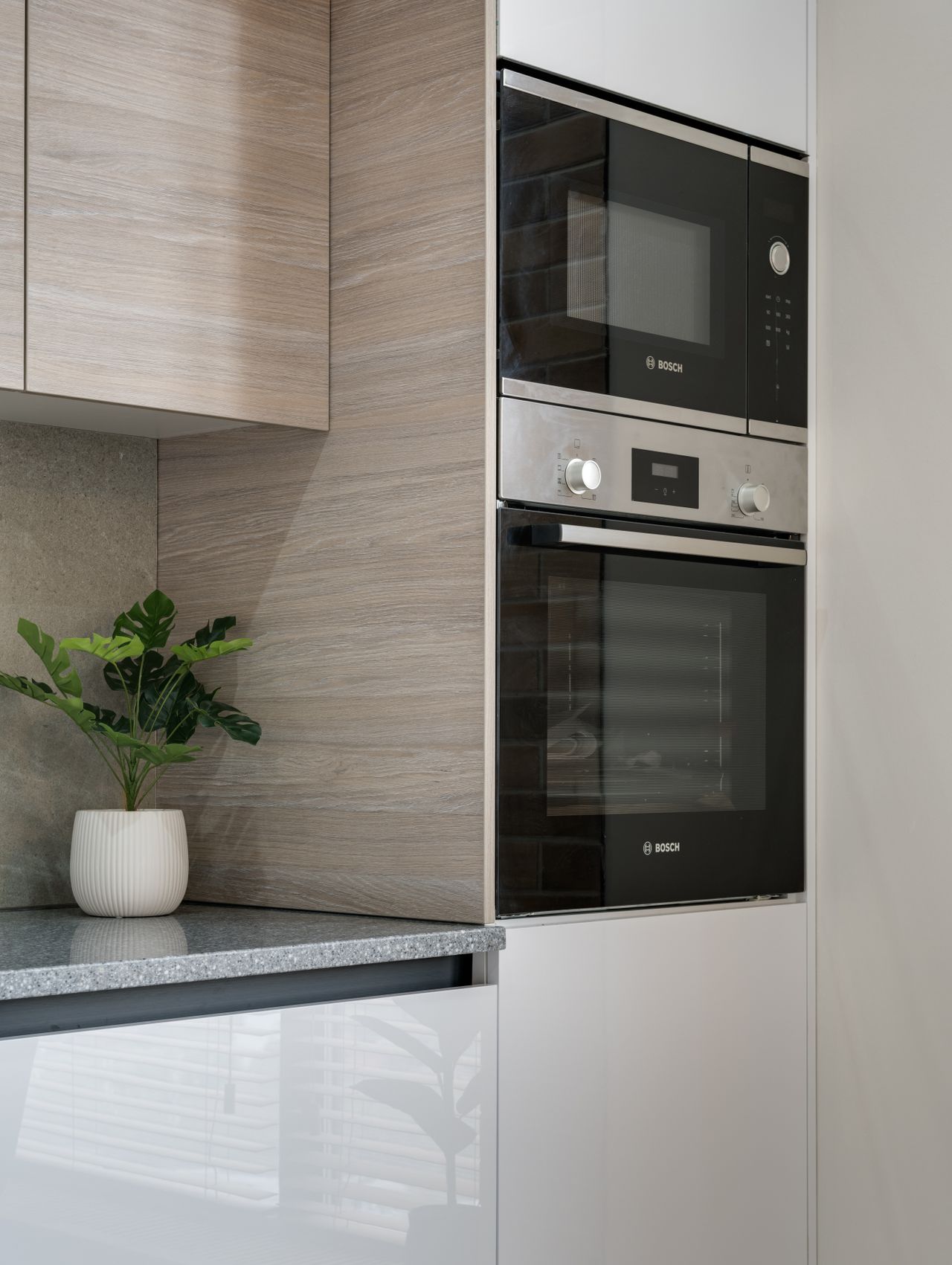
Counter space is the real currency in a compact kitchen. You can own excellent appliances and still find the room unworkable if every surface disappears the moment you start cooking. The most common mistake is lining up too many freestanding appliances on the worktop – kettle, toaster, coffee machine, air fryer – until there’s nowhere left to actually prepare food. A better approach: decide which two or three countertop appliances you use every single day, give those a fixed home, then put everything else in a cupboard and bring it out only when it’s needed. A wall-mounted microwave, or an over-hob extractor with a built-in microwave shelf, both recover worktop space without removing the appliance from the kitchen entirely. Built-in or semi-integrated appliances – where the unit sits behind a cabinet door – keep the kitchen’s visual line clean and stop the room feeling cluttered even when it’s fully equipped. It’s especially worth doing this with dishwashers and washing machines if your cabinet carcasses allow it.
Integrated Appliances vs Freestanding: What Makes Sense in Dublin
Built-in appliances cost more upfront, but they make a real difference in a small kitchen by eliminating the visual noise of multiple finishes competing for attention. A fully built-in fridge freezer behind a cabinet door doesn’t read as a separate object in the room – it becomes part of the joinery, and the space feels ordered, even a bit larger. The practical downside is that replacing a built-in appliance is trickier; you need a model that fits the existing carcass, and in a rented property you usually can’t install one without landlord permission anyway. Freestanding appliances are the more flexible and generally more affordable choice, and modern freestanding models in brushed steel or matte black can look every bit as considered as built-in ones in a well-designed kitchen. For Dublin renters – who make up a large share of people living in compact city-centre kitchens, freestanding is almost always the right call, since you can take the appliances with you when you move. Homeowners with a kitchen that’s staying put for a decade or more have better reason to think seriously about going integrated.
Making Vertical Space Work Harder
Here’s the thing: most compact kitchens use their horizontal space fairly well but ignore the vertical dimension almost entirely. Wall-mounted shelving above the worktop – one or two shelves, no more, or the room starts to feel enclosed – is a straightforward way to store cooking oils, spices, and small items that’d otherwise crowd the counter. A magnetic knife strip on the wall replaces a knife block that takes up a surprisingly large footprint on a worktop. Over-the-door organisers on pantry cupboards, and pull-out fittings inside base units, can dramatically increase usable storage volume without any structural work at all. If you have an extractor hood above the hob, check whether it takes a shelf or rail attachment, many do, and it’s essentially a free storage spot for frequently used items. So don’t overlook the space above your fridge freezer either; a slim shelf unit or a couple of strong hooks can handle awkward things like chopping boards, baking trays, and oven gloves that would otherwise drift across your worktop.
Conclusion
Making the most of a compact Dublin kitchen comes down to two things: picking appliances with the right dimensions for your actual space, and being deliberate about what earns a permanent spot on your worktop. Slimline dishwashers, carefully sized fridge freezers, and combination appliances that handle multiple jobs all help a small kitchen punch above its weight. Layout choices – whether you go integrated or freestanding, how you use vertical space, which appliances genuinely need to be within arm’s reach every day – matter just as much as the appliances themselves. The goal is a kitchen that feels workable and calm rather than cramped; honestly, that’s entirely achievable in even the smallest Dublin flat or terrace if you think the decisions through before you buy.