Small bathrooms can feel frustrating fast, so if you’re wondering whether a curved shower enclosure will actually help, the short answer is yes.
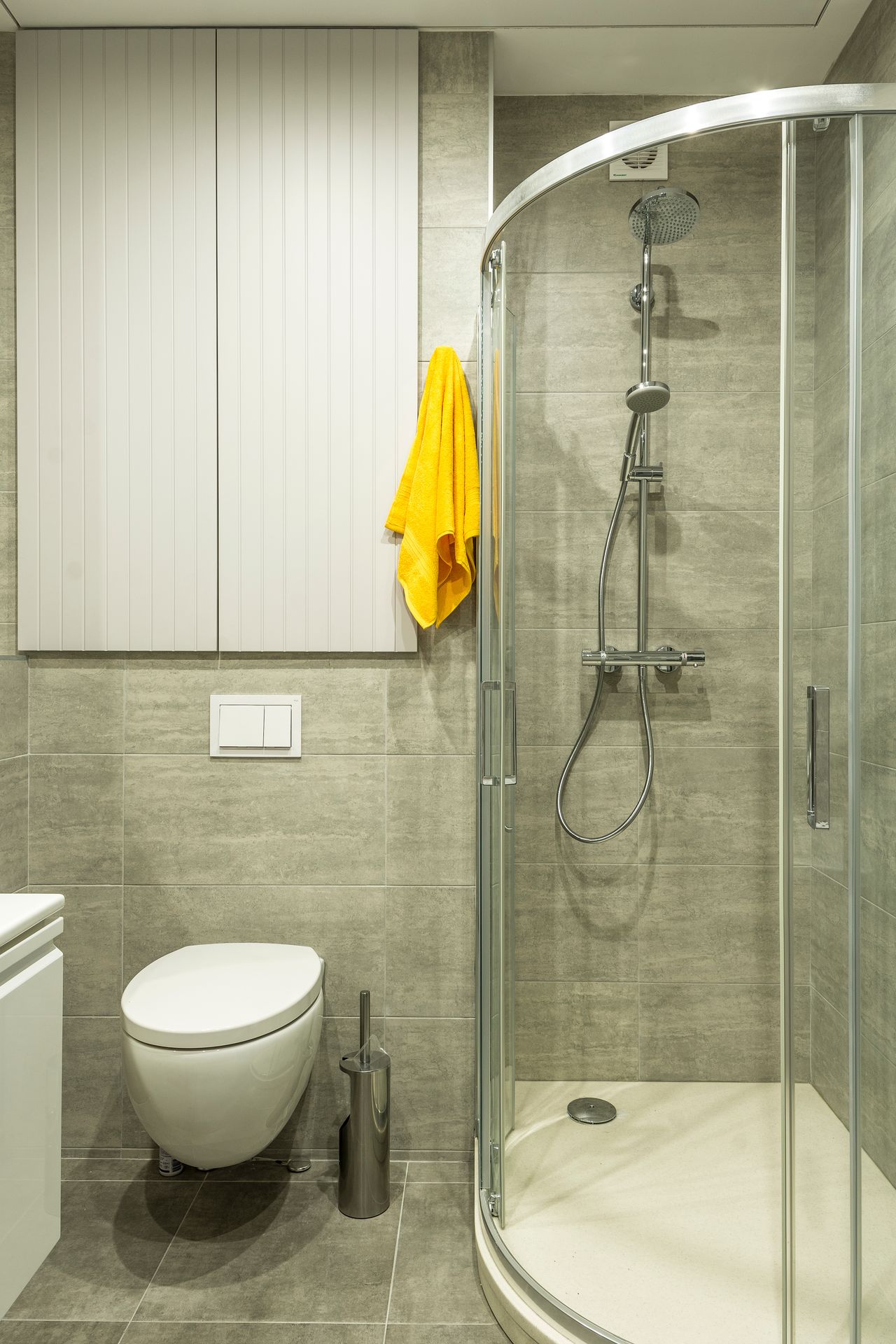
It really comes down to shape, not size. A curved enclosure tucks neatly into the corner, opens up the floor where you actually walk, and takes the edge off that cramped feeling you get the moment you step in.
Here’s why they work so well when space is tight:
- They make better use of awkward corner space
- The curved front gives you more room to move past it
- They soften the look of a tight layout, so it feels less boxed in
- Day to day, they’re just easier to move around
Getting the sizing right means that even a really compact bathroom can feel a lot more comfortable to use.
How To Make Better Use of an Awkward Corner
Most bathrooms have corners that don’t really earn their keep. A curved shower enclosure fixes that. It sits flush into the corner and pulls the front edge inward, so instead of pushing further into the room, it gives space back.
Here’s what that looks like in practice; a square enclosure carves a solid block out of the floor, whilst a curved one trims that footprint and hands some of it back to you. The difference shows up exactly where you feel it most, right in front of the shower where you actually stand and turn.
If you’re weighing up options, the curved shower enclosures from Heat and Plumb are a good example of this done well. Heat and Plumb is a UK bathroom retailer, and their curved enclosures are designed to work with the shape of a small bathroom rather than fight it, so you keep more usable floor space without shrinking the shower itself.
That said, the brand matters less than getting the shape and size right for your room. Measure the corner you’re working with, think about which way the door needs to open, and check there’s enough clearance in front for you to step in and out comfortably. A curved enclosure only saves space if it actually fits the way you use the bathroom.
Why the Room Feels Easier to Move Around In
There’s a difference between how much space a bathroom technically has and how spacious it actually feels, but curved enclosures help with both.
You’re not stepping around sharp corners or squeezing past bulky edges every time you move around the room. The layout flows more naturally, which makes a bigger difference than most people expect.
And in bathrooms under four or five square metres, that extra breathing room matters. It can be the difference between a bathroom that feels manageable and one that constantly gets in your way.
The Size of the Enclosure Still Matters
A curved enclosure is not automatically space-saving. The size still needs to suit the room properly, but if you choose one that’s too large, you lose the benefit.
Most quadrant enclosures fall into a fairly standard range:
- 800mm x 800mm – compact and efficient
- 900mm x 900mm – a good middle ground for most bathrooms
- 1000mm x 1000mm – more comfortable inside, but needs extra room
Before choosing, take a little time to think through the layout properly. Start by measuring the corner carefully. After, look at what sits directly in front of the enclosure, and check how the door opens.
If space is tight, sliding or bi-fold doors are usually the better option. Pivot doors work well, too, but they need more clearance.
One simple trick? Mark the footprint on the floor with masking tape before buying anything. Doing so means you’ll get an instant feel for how much space you’ll actually have left.
Curved Enclosures Work Best in Specific Bathroom Layouts
Curved shower enclosures work best when the room naturally supports them.
A true corner with two clear walls is ideal, especially in en-suites and smaller family bathrooms. In layouts like these, a curved enclosure avoids taking over an entire wall. The rest of the room stays usable, which is usually the biggest challenge in compact bathrooms.
That said, they’re not the perfect fit for every space. For instance, in larger bathrooms, a walk-in or rectangular enclosure might suit the layout better. Curved designs are most effective when saving floor space is the priority.
Key Details That Make a Difference
Once you’ve settled on the shape, a few smaller details will affect how well the enclosure works long term.
Tray compatibility
It’s usually worth buying the tray and enclosure together. You avoid fitting issues, everything lines up properly, and the seal tends to be more reliable.
Glass thickness
For most homes, 6mm glass is absolutely fine. 8mm glass feels sturdier and more premium, but it’s also heavier. Over time, that extra weight can affect how smoothly the doors operate if the fittings aren’t high-quality.
Finish
Chrome is still the easiest finish to match with existing bathroom fittings. But brushed nickel and matte black can make the space feel more considered without needing a full redesign.
Entry type
Pivot doors are common because they’re simple and practical. However, if the area in front of the shower is tight, sliding doors are usually the smarter choice. They keep the walkway clear and make the room easier to use day to day.
These might seem like small details, but they shape how the enclosure feels every single time you use it.
Find the Right Option for Your Bathroom
Curved shower enclosures do save space, but more importantly, they make compact bathrooms feel easier to live with.
They use corner space efficiently, open up the floor, and reduce that boxed-in feeling smaller bathrooms often have.
If you’re planning a bathroom update, start with the layout first. Think about movement, clearance, and how the room needs to function every day. From there, you can then look at the details like size, door style, and finish.