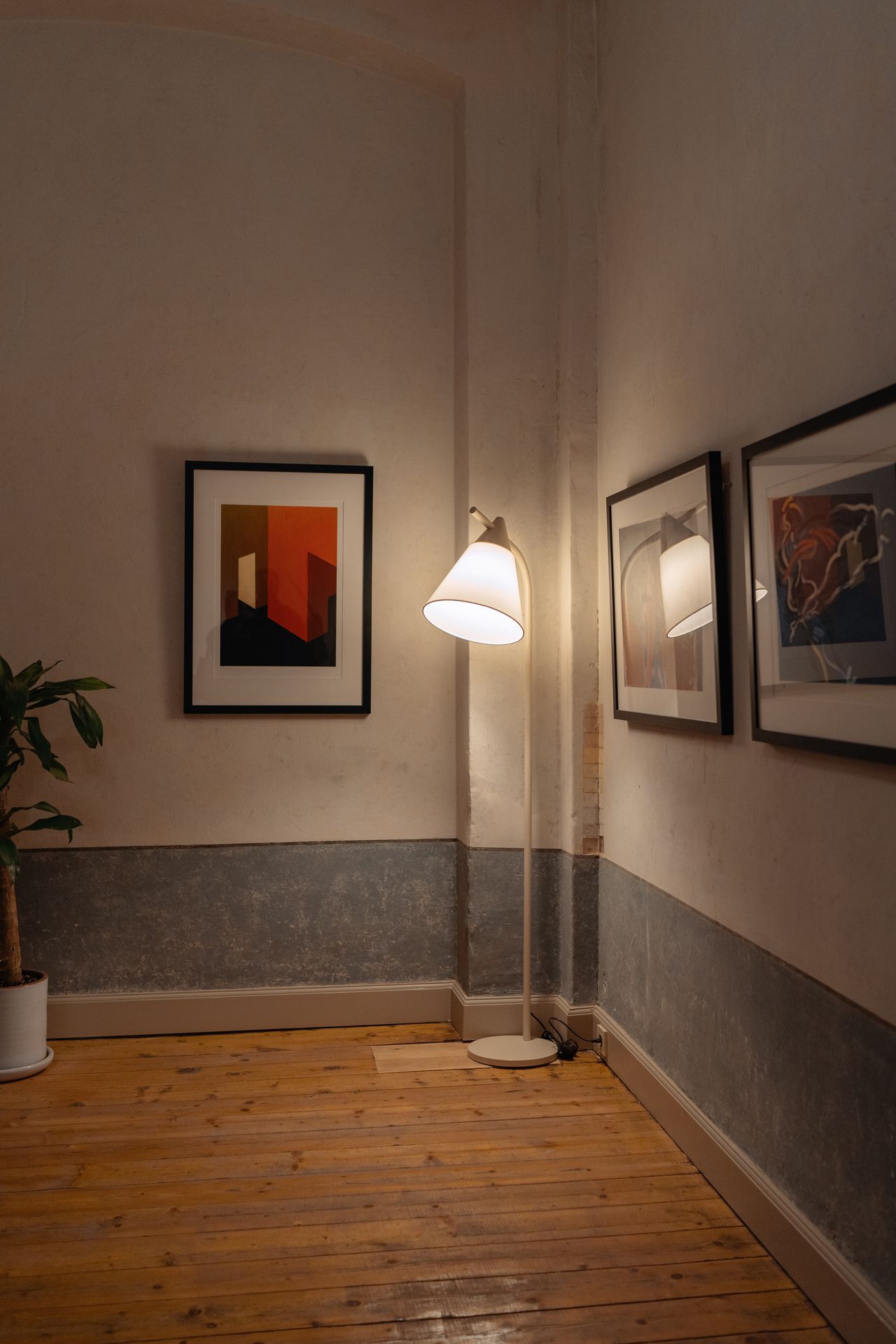
A floor lamp has two jobs in a room. It provides light, and it takes up visual space. That second role matters more than many people expect. The shape of the base, the angle of the stem, and the size of the shade can all affect how balanced a living room feels. When looking at modern floor lamps, it helps to think beyond brightness and consider how the fixture will interact with the furniture, architecture, and empty space around it.
Think About the Lamp as Furniture
A floor lamp may be a light source, but it also behaves a lot like a piece of furniture. It has height, width, weight, and a silhouette that can change the look of the room even when the lamp is turned off.
A slim lamp can add height without making a corner feel crowded. A wider or more sculptural design can create a stronger focal point. Curved arms can soften straight furniture, while a more angular lamp can add structure to a room filled with rounded shapes.
This is why shape matters. The lamp is part of the visual rhythm of the room, not an object that disappears once the light is on.
Use Shape to Balance the Furniture
Living rooms often include large horizontal pieces such as sofas, coffee tables, and media units. A floor lamp adds vertical interest and can help break up those lower shapes.
If the furniture feels heavy or boxy, a lamp with a narrow frame or gentle curve can make the room feel lighter. If the furniture is low and minimal, a taller, more graphic lamp can give the space extra presence.
The goal is not to match every line in the room. A little contrast often makes the arrangement feel more natural. The lamp can echo one shape while introducing another, which helps the space feel layered rather than overly coordinated.
Let the Shade Influence the Mood
The shade has a major effect on both light and appearance. A wide shade creates a different visual impression from a narrow one, even when both fixtures are the same height.
An open shade can direct more light across the room and may feel more casual. A deeper shade can create a more focused pool of light, which works well near a reading chair or desk. Opaque materials may create a stronger sense of mood, while translucent shades can spread light more gently.
The shape of the shade should also make sense with the base. A large shade on a very delicate stem may feel top-heavy, while a tiny shade on a broad base can seem out of proportion.
Consider What the Lamp Looks Like From Every Angle
Floor lamps often sit in open areas where they can be seen from several directions. A lamp beside a sofa may be visible from the entry, the dining area, and the opposite side of the room.
That makes the full silhouette important. Look at the rear of the fixture, the cord placement, and the way the base meets the floor. A lamp that looks balanced from one side but awkward from another may be harder to place in an open-plan space.
This matters even more with sculptural designs. When the lamp has a strong form, it should feel intentional from more than one viewpoint.
Match Scale to the Space Around It
A beautiful lamp can still feel wrong if the scale is off. A very small lamp may disappear beside a large sectional, while a large fixture can overwhelm a narrow chair or compact corner.
Think about the furniture the lamp will sit beside. A floor lamp near a lounge chair should feel close enough to be useful and large enough to hold its own. Beside a long sofa, a taller or more substantial form may create better balance.
Ceiling height also plays a role. In a room with high ceilings, a short lamp can make the lower half of the room feel crowded. A taller fixture helps draw the eye upward and can connect the furniture to the architecture around it.
Use Curves to Soften a Structured Room
Many modern rooms contain straight lines, from cabinetry and shelving to sofas and tables. A curved floor lamp can introduce movement and make the space feel less rigid.
An arched arm works especially well when the lamp needs to reach over a chair or sofa without placing the base too close. Rounded shades can also soften a room filled with rectangular forms.
This does not mean every structured room needs a dramatic curve. Even a subtle bend in the stem or a rounded base can create enough contrast to make the arrangement feel more relaxed.
Use Stronger Forms as a Focal Point
Some floor lamps are designed to stand out. They may have an unusual base, a large shade, or a sculptural frame that draws attention even from across the room.
These designs can work well in spaces where the furniture is simple and the room needs one stronger visual element. A lamp can fill an empty corner without adding another table, chair, or decorative object.
When the fixture is bold, the area around it should have enough breathing room. Crowding a sculptural lamp with too many other pieces can reduce its impact and make the corner feel busy.
Choose Shape and Light Together
The most successful floor lamps combine useful light with a form that suits the room. Shape affects balance, scale affects placement, and the shade controls how the light feels.
Thinking about all of these elements together makes the choice easier. Instead of asking whether a lamp is attractive on its own, consider what it will contribute to the space as a whole.
A well-chosen floor lamp can brighten a dark corner, support a reading area, and add a strong design element at the same time. When the shape and the light work together, the fixture becomes part of the room rather than an accessory added at the end.